Some Spinners Just Want to Have Fun

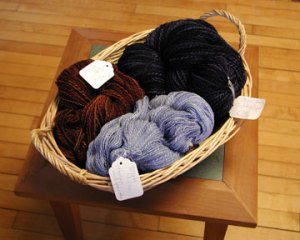
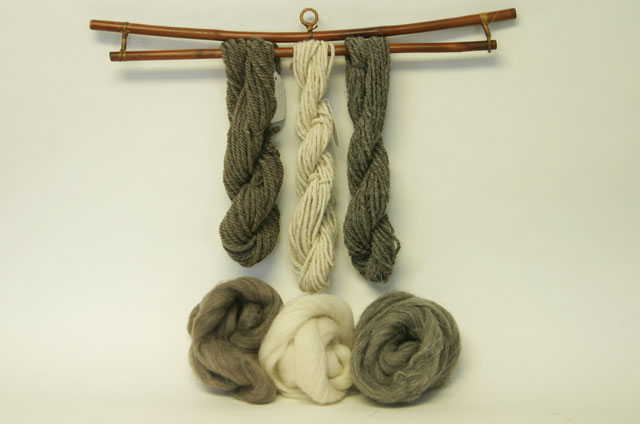
Photo of 3 skeins of yarn and their starting fibers, handspun by Joanne Littler, Pine Ledge Fiber Studio, Fairfax, VT
Spun for Fun
3-ply wool yarns handspun by Joanne Littler

When you sit down at your wheel to spin –
You don’t have to know what you’re going to do with your yarn.
You don’t have to have a project in mind.

You don’t have to understand the meaning of twist and grist.
You don’t need to know your flyer to wheel ratio.

You don’t need to know what breed or type your wool is.
Or where the cotton came from.

Some spinners do.

Some spinners start out with a need to know all of those things
(and much, much more).
Some spinners develop an interest in the “technical” side of spinning after they’ve been spinning for a while.
Some spinners learn to use particular bits of information to suit their needs.
Some spinners focus their attention one type of fiber and become experts in that area.

And some spinners don’t.

Sometimes spinners just spin for fun.

All the details, facts and figures don’t matter one bit.  And they might never do. Because they don’t have to.

Because spinning – all by itself – for no particular reason – is fun.
Relaxing.  Satisfying.  Pleasurable.  Off in your own world – creative, happy, mind-blowing honest-to-goodness fun.

However you come to it, whatever you do with it, wherever it takes you – whatever it looks like to anyone else – Somehow, some way, at some level –

We’re all doing it because it’s fun.

We don’t have to pay our taxes in yarn.
(FYI the American Revolution wasn’t only about tea).
We don’t have to make yarn to clothe our families and ourselves.

We spin because we enjoy it.
It floats our boat.
Knocks our socks off.
Takes us away.

Maybe not at first.  Those first few minutes (and hours, and days) of struggling to coordinate hands and feet, fingers and fibers – those moments feel frustrating and tense.
So you walk away.
You take a nap.
And you come back and try again.

Your desire to spin — if anyone asks – may be hard to explain.
Because maybe you don’t know what you’re going to do with your yarn.
Maybe you don’t know for sure which part is called the flyer.
And maybe ratio sounds too much like math.
Maybe you don’t know the difference between protein fibers and cellulose.
And maybe (at least for now) you don’t care.
You just want to spin. Just for fun.

If you choose hand spinning as a way to spend your time, you’re choosing an activity that many people think of as old-fashioned, unusual, unnecessary, and  – different. Maybe even weird.  And yet, you’re choosing it anyway.

Maybe you feel that “it” has chosen you.   Drawing you in, opening up a whole new world of “wonderfulness”.

No matter where you are – new to the craft or an old hand at it – sometimes it seems like there’s so much more to learn, so many interesting avenues of discovery, so many talented and creative people offering encouragement and advice – it almost seems like too much.

Maybe it is.  And maybe that’s the good news.
Maybe that’s when you know it’s time to sit down at your wheel.  Pick up whatever fiber is handy and just spin.  See where it takes you.
Relax.  Enjoy.  And have some fun.

I gotta go spin.
Joanne

What’s In Your (Handspun) Stash?

If you’re considering weaving with your handspun yarn –
If  you think weaving might be a good way to use up some of the growing collection of yarns  in your stash –
You might also be wondering which (if any) of your handspun yarns are suitable for weaving.

So how do you find out?
You could grab a few skeins, start weaving and see what happens.
And choosing an impromptu, spontaneous approach might work for you – it might even lead to some unbelievably fabulous fabric.

But if you’re familiar with weaving, you’ll probably agree:  It takes a considerable amount of time to prepare.

And it’s not just about getting the loom ready.

Choosing the right yarn for the project and calculating how much yarn you need are significant steps in the process.

When you decide you want to try weaving with your handspun yarn – you need to know what you have.  Take a good look at what’s in your stash.  You may want to begin by sorting and analyzing – matching colors and characteristics but I think there’s something else to take care of first.

Pick up a skein of your handspun yarn.  Can you look at it and immediately say without question what type of fiber it is and how many yards of it you have?

If not, no matter how soft or strong, thin or thick,  no matter how beautiful (or ugly) you think your handspun is, – if you don’t know what it is and how much you have, the yarn isn’t ready.  Not ready to choose (or sort, or determine whether or not it’s suitable) – and not ready to use.

My advice – if you’re not doing this already – start labeling your skeins.

Photo of handspun yarn skeins using string tags as temporary labels
Some of my handspun yarn labeled and ready. Next stop: a storage bin labeled "Handspun Yarns for Weaving"

Whether you’re weaving with yarn strictly from your stash or you’re willing and able to augment your supply from another source, it’s in your best interest to have a way of recognizing what you have – before you try to figure out what to do with it.

Sometimes you can alter the project to ‘fit’ the yarn.  Sometimes you can make more yarn to fit the project.  But either way, you need to start where you are – and part of that is knowing (and understanding) what you have to work with.

If you don’t (yet) have a way to attach important information to your skeins of handspun yarn consider this: every time to handle those skeins, every time you consider whether or not it’s ‘suitable’ for a project, the same question comes up – what (exactly) is it, and how much of it do you have?

Why not eliminate that question and move past wondering?

It doesn’t have to be a big deal.  If you’re looking for a quick and easy, inexpensive way to label your skeins, try these:

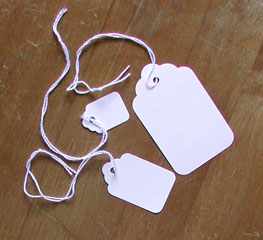
Photo of string tags used to label handspun yarn skeins
String tags are an easy and inexpensive way to label your skeins of handspun yarn.

String tags are your friends.  Buy some or make your own.

I use string tags on all my handspun skeins.   And because I only attach one of these tags after the skein is finished – (wetted or washed, twist set, skein dried and yardage re-measured) the presence of a string tag on one of my skeins is like a big (or little) white flag that says “ready”.

Ready to use, ready to label for sale, or ready to save/store for later.

The information on these tags might only include yardage after finishing, dry weight and fiber type – but that’s enough for me to compare what I have, to what I need, for what I want to weave.  Any other information I choose to keep is recorded  in a separate spinning notebook.

Labeling deserves a place in your spinning routine, however you plan to use your yarn.

Think of it as a gift to yourself.  Having the information you need – right at your fingertips – can save you time in the long run.
Time you might rather spend spinning and weaving.

So – How do you know what’s in your handspun stash?

Joanne's blog signature, Pine Ledge Fiber Studio